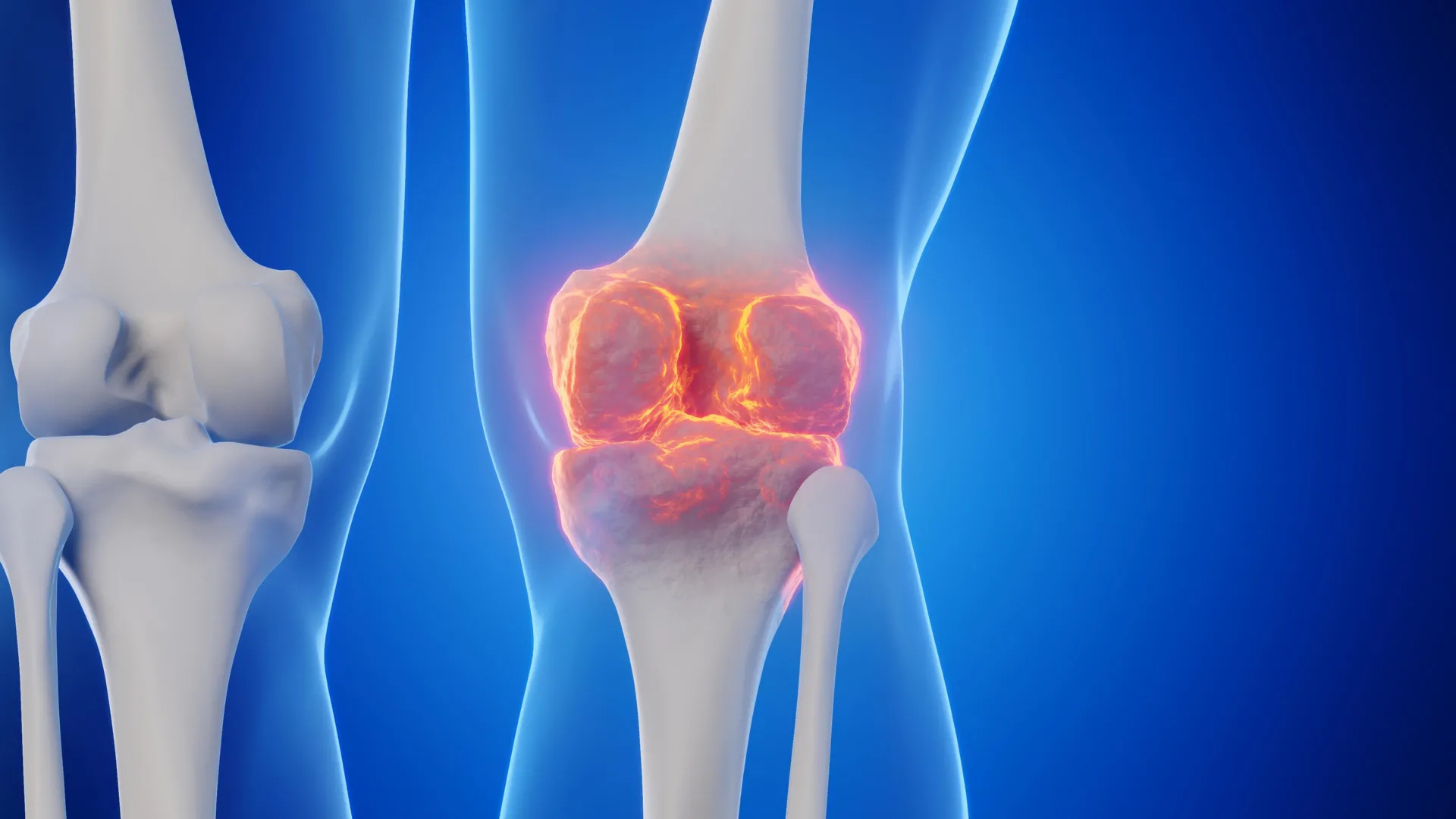
Scientists have identified a way to restore cartilage in aging knee joints, at least in mice, by blocking a protein whose levels rise with age. The approach not only reversed naturally occurring cartilage loss in older animals, but also protected mice from developing arthritis after knee injuries similar to ACL tears in people.
The findings also showed promise in human tissue. Cartilage samples collected during knee replacement surgeries responded to the treatment by beginning to produce new, functional cartilage.
Together, the results suggest that cartilage damaged by aging or arthritis may be more capable of repair than previously thought. If the strategy ultimately works in people, researchers believe it could potentially lead to an oral medicine or injection that regenerates cartilage and reduces the need for knee or hip replacement surgery.