This essay, co-authored by a historian of science and an X-ray crystallographer, sheds new light on Rosalind Franklin’s Photograph 51. We refute the infamous claim that, unlike James Watson, Franklin failed to see the picture’s potential significance for interpreting the helical structure of DNA. Rather, Franklin decided to take Photograph 51 precisely because she knew that key parameters of DNA’s B form helix could be calculated from the resulting image. We show that she had in fact already made those calculations — on her earlier Photograph 49 — and she reused the same DNA sample for Photograph 51 to create a better-centered but otherwise identical diffraction image that would be suitable for publication. Thus Photograph 51 was not the result of an experiment in need of analysis, but was refined documentation for calculations that she had already performed on the earlier photograph. We argue that colleagues and later commentators did not merely overlook Franklin’s original reason for creating the strikingly clear and informative Photograph 51, they rhetorically erased her skill and judgment by describing it as though nature spoke for itself through the image — and to Watson, but not to Franklin.
Despite what Watson said, Rosalind Franklin understood structure of DNA first
HN Hacker News 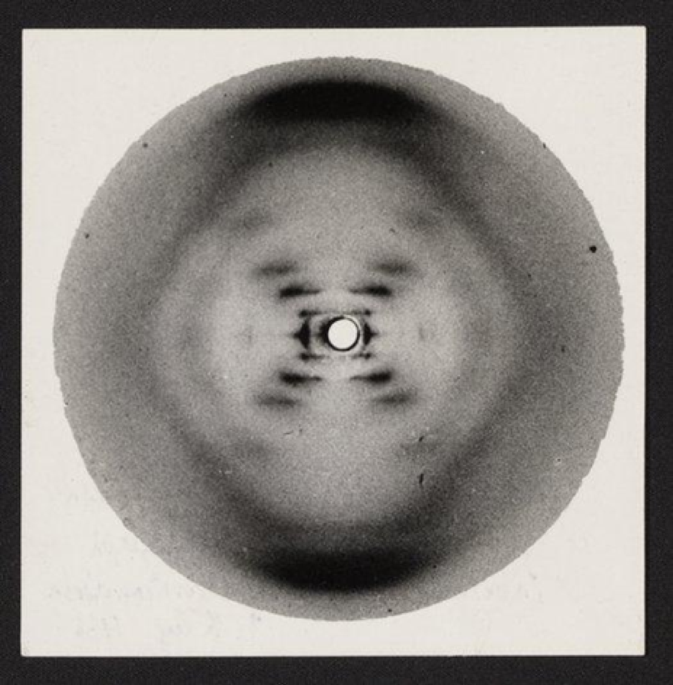
Key takeaways
A new essay argues that Rosalind Franklin understood the DNA structure before Watson, based on her work with Photograph 51.
- The essay claims Franklin recognized the significance of Photograph 51 before Watson.
- Franklin reused a DNA sample to create a clearer image for publication.
- Colleagues overlooked her skill in interpreting the photograph.
Summarised automatically by AI from the original article by Hacker News. AI can make mistakes, so check the original for details.
Read the full story on Hacker News That's the opening of the story. The full piece is published by Hacker News.
Continue reading ↗ Story details
- Published
- By
- gumby
- Format
- Article
- Original
- link.springer.com ↗